Digital Minimalism And The Art Of Deeper Friendships
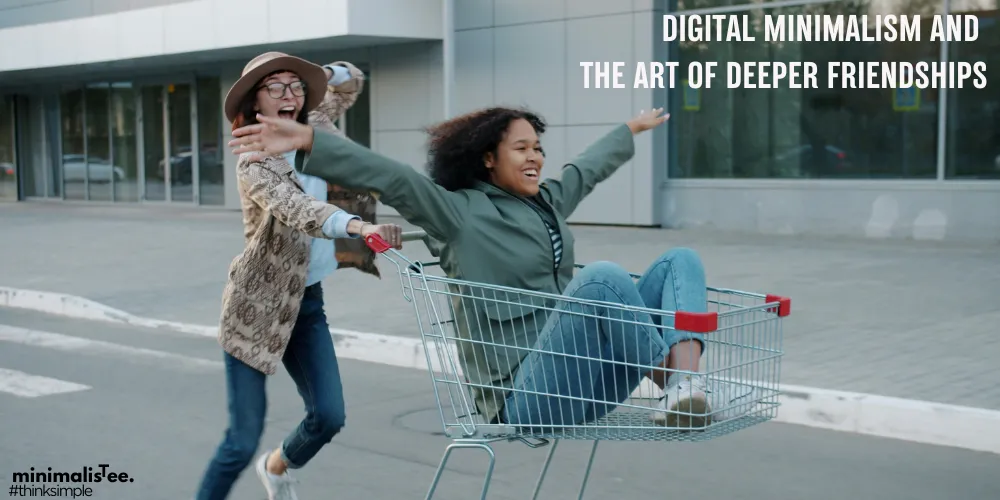
For years, modern culture has quietly encouraged us to believe that a “good” social life should look busy. A full calendar, constant messages, endless group chats, and people reacting to every small update online. Somewhere along the way, relationships became tied to visibility. The more connected we appeared, the more fulfilled we were supposed to feel.
But many people are starting to notice something uncomfortable. Even with constant interaction, emotional loneliness still exists.
That is because human connection was never designed to function like endless consumption.
We started collecting people the same way we collect clothes, subscriptions, or online content. More conversations, more attention, more social presence. Yet very little depth. Instead of feeling emotionally supported, many people now feel socially exhausted.
This is where minimalism enters the picture in a completely unexpected way.
Minimalism Changes the Way We Give Attention
One of the biggest effects of minimalist living is not physical. It is mental.
When life becomes overcrowded with distractions, attention becomes fragmented. Conversations compete with notifications. Time with loved ones competes with scrolling. Even moments of silence feel uncomfortable because we have trained ourselves to constantly consume stimulation.
Minimalism interrupts that cycle.
It encourages intentional attention. Instead of spreading emotional energy across dozens of shallow interactions, people begin focusing more deeply on fewer meaningful relationships. Conversations become slower and more present. Listening improves. People stop multitasking through emotional moments.
And surprisingly, relationships often become stronger because of it.
Digital Minimalism Is Reshaping Friendships
Social media created a strange version of closeness where everyone is permanently visible but not necessarily emotionally available.
You may know what someone ate for breakfast, where they travelled last month, or which song they are currently obsessed with, yet still have no idea how they are actually feeling.
Digital minimalism questions this illusion.
Reducing constant online interaction often creates space for more genuine communication. Instead of reacting to stories every day, people start having real conversations again. Instead of maintaining hundreds of surface-level connections, they invest energy into friendships that feel emotionally safe and nourishing.
This shift can feel uncomfortable at first because many people associate availability with kindness. But minimalism teaches an important lesson: protecting your emotional energy is not selfishness. It is emotional maturity.
Minimalism Makes Dating More Intentional
Modern dating often feels overwhelming because people are exposed to endless choices, endless comparison, and endless distraction.
Minimalism brings intentionality back into relationships.
Instead of chasing attention, people begin looking for compatibility. Instead of confusing excitement with connection, they begin valuing emotional calmness, stability, and presence. The focus slowly shifts from performance to authenticity.
And perhaps that is why minimalist relationships often feel different. There is less pressure to impress and more room to simply exist honestly together.
The Real Beauty of Emotional Minimalism
At its core, minimalism is not about isolation or cutting people off. It is about removing emotional clutter that prevents relationships from feeling meaningful.
It asks difficult but necessary questions.
Which relationships genuinely bring peace into your life?
Which conversations leave you emotionally drained?
Who truly sees you beyond your online presence?
The answers are rarely comfortable, but they are often freeing.
Because sometimes a fuller life is not created by adding more people, more interaction, or more noise.
Sometimes it is created by finally making space for deeper connection.